

 Loading ...
 Breast cancer happens when normal cells in the breast change and grow out of control. These cancer cells not only cause a tumor in the breast tissue, they also have the capacity to spread to other organs such as lungs, liver and bone. Women sometimes discover they have breast cancer because they find a lump in one of their breasts.
Risk factors refer to the chance that a person has to develop breast cancer. Having a risk factor or several risk factors does not mean a person will get the disease; the chances are only slightly higher than in the average person. It is important to know that every woman is at risk.
About 20-30% of women with breast cancer have a family history of the disease. Some people have abnormal genes that make them more likely to develop breast cancer. The most common gene defects are found in the BRCA1 and BRCA2 genes. These genes normally produce proteins that protect one from cancer.
Women with the gene defect (mutation) have up to an 80% chance of getting breast cancer during her life.
About 5-10% of breast cancers are thought to be caused by these inherited gene mutations (abnormal changes passed through families).
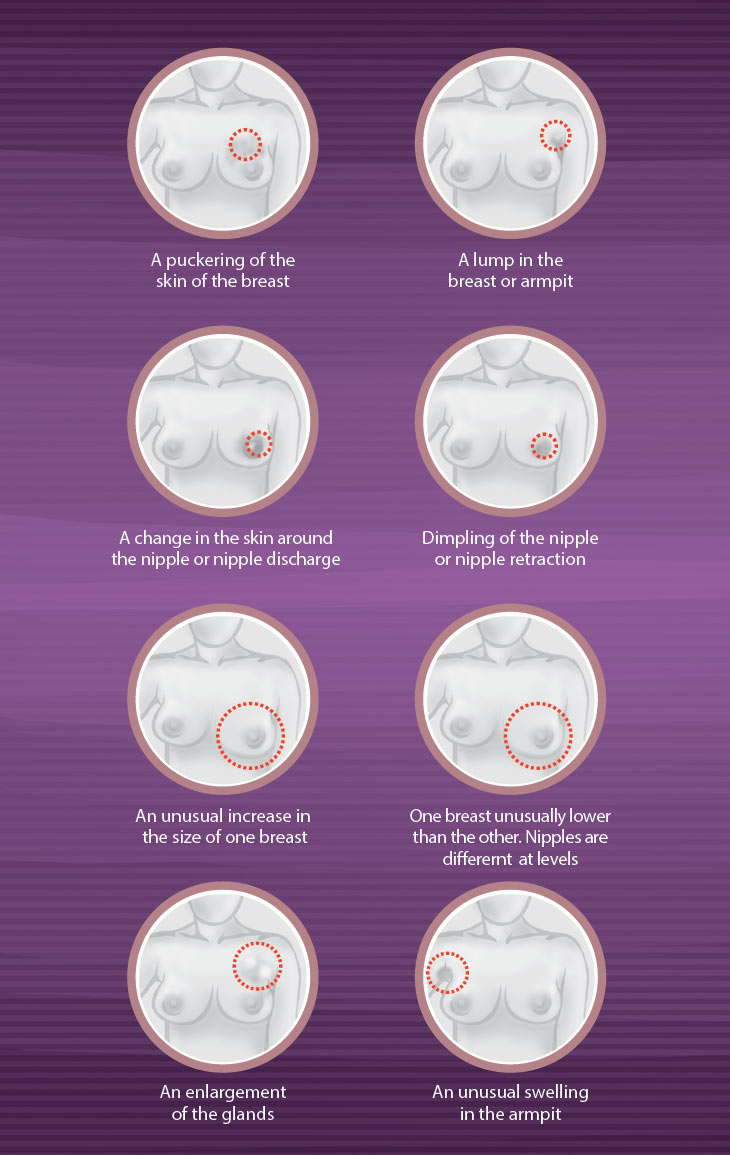
In the early stages of breast cancer there may be no signs or symptoms. As the cancer grows and enlarges you may experience any of these changes:
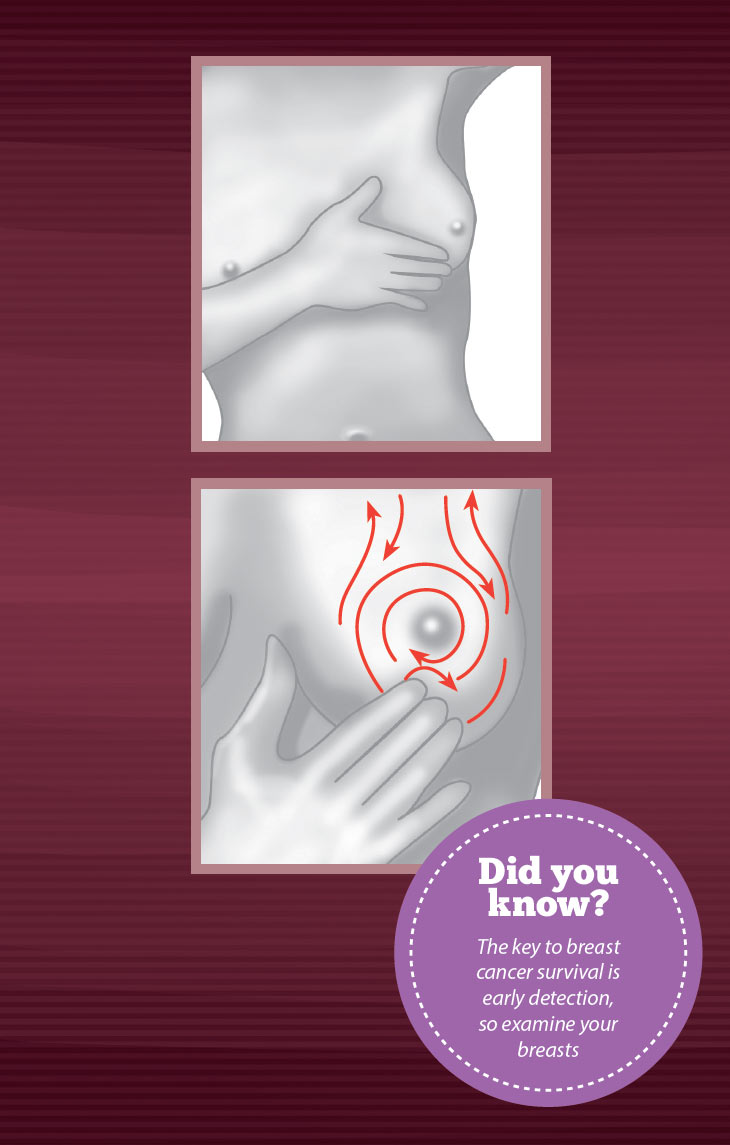
Breast self-examination is a way of finding changes in your own breasts. You should become familiar with how your breasts look and feel, so that one can notice differences over time. The best time to do a breast self-examination is a week after your period ends. If you no longer get your periods, you can exam at any time. Consider examining yourself once a month.
A mammogram is a breast x-ray. The breast is pressed between two plates and x-rays are used to take pictures of breast tissue. It is the best screening test available to detect breast cancer before a lump is palpable.
Screening is recommended from the age of 40 onwards. There is some controversy surrounding starting before age 50 as the chances for having breast cancer is less common and that may result in a large number of women that will be investigated unnecessarily. Mammograms are less likely to find breast tumors in women younger than in women older than 50 years.
Your decision to have or delay mammograms between ages 40 to 49 should be based on your individual preferences and risk of breast cancer. Screening with a mammogram is recommended once a year and after age 50 this test is recommended every second year.
Women who have screening mammograms have a lower chance of dying from breast cancer than women who do not have screening mammograms because the cancer is picked up early.
If your mammogram is abnormal, you will need further testing. In most cases, a woman with an abnormal mammogram does not have breast cancer. In 90% of women with an abnormal mammogram, breast cancer is not found.
The following investigations will evaluate the abnormality seen on a mammogram:
Treatment of breast cancer depends on the type of breast cancer and the stage of the cancer i.e. the size of the tumor and whether it is in the breast only or has spread to lymph glands or other parts of the body. Treatments include surgery, chemotherapy, hormonal therapy, biological therapy and radiation.
Most patients get a combination of these therapies:
Death rates from breast cancer has decreased significantly in the past 20 years due to treatment advances and earlier detection through screening and increased awareness.
Loading ...